If you wish to add articles of interest to this site, please contact me via my e-mail address. I will 'eventually' reply to all posts. All submitted articles will be author acknowledged unless otherwise requested.
Copyright © 2026 by Nigel G Wilcox
All Rights reserved
E-Mail: ngwilcox100@gmail.com
Web Title: paragon.myvnc.com
2026
Designed by GOEMO.de
Powered by S-AM3L1A-NGW
NW Education, Training & Development
Looking at Education today, one Perspective...
Parent Site: http://paragon.myvnc.com Paragon Publications UK
The Integrity Crisis in Academia: Reflections on the
'Professor' Arday Controversy
A response to: The Telegraph - Rowling: Cambridge could have spared Arday public shaming
Original story was by Tom McArdle – 18.08.26
Education & Professional Development
Birmingham ICC 2001
Continued>>>
2-3
2-3
Pages
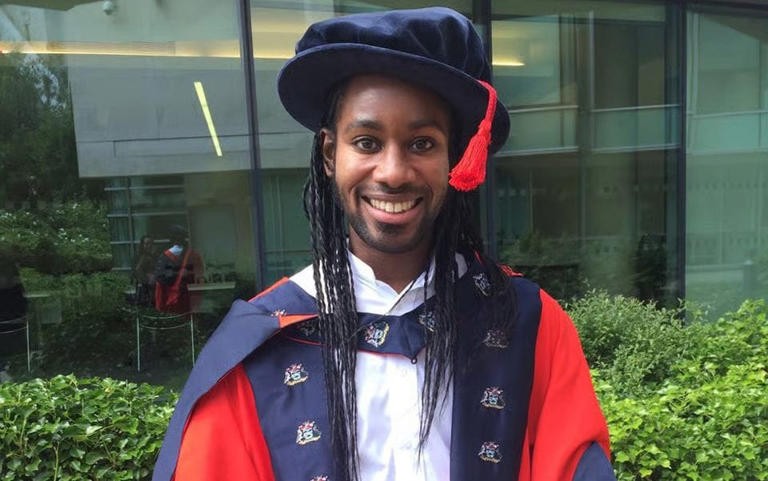
Jason Arday was found dead last week, (14.08.26) after resigning his chair at Cambridge under public scrutiny
Yet the Arday controversy highlights another uncomfortable dimension: the reluctance of institutions to act decisively when issues of race intersect with allegations of misconduct. In an era where universities are acutely aware of representation, diversity, and historical inequities, some administrators fear that taking action against a scholar of colour may be misinterpreted as discriminatory or politically motivated. This hesitation, however well‑intentioned, can create an environment where accountability becomes uneven.
The concern is not about race itself, but about the institutional fear of appearing biased. When misconduct is overlooked because leaders worry about optics, the principle of equal academic standards is compromised. Integrity cannot be selectively applied. If universities fail to uphold rigorous standards for all scholars, regardless of background; they risk normalising shortcuts that undermine the very purpose of scholarship. This reluctance to act does not protect anyone; instead, it erodes confidence in academic qualifications and weakens the value of research outputs.
The case of Professor Arday is therefore not merely about one individual; it is about the precedent such cases set. Academic institutions must be able to distinguish between genuine support for diversity and the avoidance of difficult decisions. True equality means holding everyone to the same standards of honesty, rigour, and accountability. Anything less undermines both fairness and excellence.
Universities must confront this challenge with clarity and conviction. The rise of A.I. demands new frameworks for evaluating originality, new methods for detecting plagiarism, and renewed emphasis on the importance of independent thought. At the same time, institutions must reaffirm that integrity is not negotiable, and that accountability applies universally, without fear, favour, or exception.
At its best, academia is a space where ideas evolve, where knowledge expands, and where individuals contribute meaningfully to the collective understanding of the world. That ideal cannot survive if trust is compromised. The integrity of research depends on authenticity, and once that is lost, the credibility of the entire academic enterprise is called into question.
The Arday controversy should serve as a reminder; and a warning, that academic integrity must be upheld consistently. Without it, the pursuit of knowledge becomes an illusion, and the future of research becomes uncertain. There should not be a two-tier system for those that have and those that do not either or via the those you know, this is common within academia too!
This technological shift has intensified long-standing concerns about academic integrity. The ease with which A.I. can produce essays, analyses, or even research proposals has blurred the line between assistance and substitution. While A.I. can be a powerful tool for exploration, it cannot replace the personal struggle, curiosity, and creative reasoning that define true scholarship. When originality is replaced by automation, the academic landscape becomes populated with work that cannot genuinely be called one’s own.
The case of Professor Arday is not merely about one individual; it is about the precedent such cases set. When institutions fail to uphold rigorous standards, they risk normalising shortcuts that undermine the very purpose of scholarship. If academic misconduct is overlooked, excused, or insufficiently addressed, it signals to students and researchers that authenticity is optional.