Menu
Diary
Nigel G Wilcox
Published 2021
The Paragon of
Modern Aviation
Bookshelf
Aircraft And Personal Development & Applications
Diary notes pending.....
Nigel G Wilcox
© Copyright Reserved - United Kingdom
Ideal Screen Composition 1680x1050
Pages
Powered by S-AM3l1A
Main Menu
The Paragon of Modern Aviation
Bookshelf
Topic Menu
01.01.26 Happy New Year for 2026 - The Drone world seem to be up in the air, (pardon the pun) like the rest of the world, What is going on? Can the CAA and the Government sort themselves out? This year, I am hoping to update this publication as last years didn't seem to get off the ground. New Updates to follow.... Déjà vu....
Renewed my Drone Registration today online £11.13, (another tax!), I am hoping this year to get out a little more with the drone, that is if we don't have our car's taken off us due to high costs to get to our locations.... we shall see...
This was the proposals set out in November 2026

Starting January 1, 2026, the UK will implement significant changes to drone regulations, including new class marks, registration requirements, and safety rules.
Key Changes in Drone Regulations
Introduction of UK Class Marks: Drones sold in the UK will now carry specific class marks ranging from UK0 to UK6. These marks indicate the drone's capabilities and the categories in which they can be flown. For example, UK0 and UK1 drones can fly over people under certain conditions, while UK2 drones require additional safety training.
Lower Registration Threshold: The weight threshold for registration has been reduced from 250 grams to 100 grams. This means that all drones weighing 100 grams or more will need to be registered, and operators must pass a free online theory test to obtain a Flyer ID.
Remote ID Requirements: Remote ID will become mandatory for all new UK-class marked drones starting January 1, 2026. This requirement will extend to legacy drones with cameras by January 1, 2028. Remote ID allows authorities to identify drones in flight, enhancing safety and accountability.
Night Flying Regulations: From January 2026, any drone flown at night must be equipped with a green flashing light to improve visibility and safety.
Changes to Flying Zones: The regulations will reorganize flying zones into clearer categories, making it easier for pilots to understand where they can fly. For instance, pilots will need an A2 Certificate of Competency (A2 CofC) to fly certain mid-weight drones closer to people.
Implications for Drone Operators
Legacy Drones: Existing drones without class marks will be classified as "legacy" drones. While they will still be legal to fly, they will face stricter operational limitations, especially in populated areas.
Compliance and Safety: Operators are encouraged to familiarize themselves with the new regulations and ensure compliance to maintain safety in the increasingly busy UK airspace.
These changes aim to modernize drone regulations, improve safety, and integrate drones more effectively into UK airspace as their usage continues to grow. For more detailed guidance, operators should refer to the official UK Civil Aviation Authority (CAA) website.
The first change is to how drones are classified – it’s no longer based simply on weight as some safety features will be considered too, but weight still plays an important part – and the second change is that you’ll need to turn on your drone’s remote ID, while the third is that most of you will now need to get your Flyer ID – which means you’ll need to pass a test.
It’s all well and good to know what changes have occurred, but it's also important to understand what you have to do. So here’s a handy guide to finding your Remote ID and taking your Flier ID test so you can make your drone compliant with the new rules.
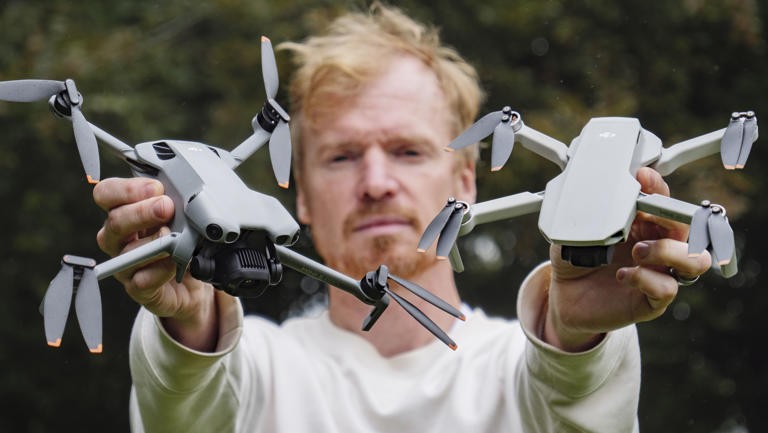
Many drones now need a Flier ID (Image credit: Tim Coleman)
How to turn on Remote ID
You can imagine Remote ID as a sort of drone license plate; it digitally broadcasts your aircraft’s serial number, real-time position data, and your operator ID – though it won’t share more personal info or a live video feed if your drone has a camera.
Many drone classes must have their Remote ID attached as of January 1, 2026, for several categories, including some drones grandfathered in under the old system. You won’t need to sort out Remote ID until January 1, 2028. Still, I’m a cautious person, and I’d just get it sorted for all your drones now if you can.
You’ll then need to look up the exact instructions for your drone on how to enter your remote ID into your device. However, it should be an option in your settings – usually under the Security, About, or dedicated Remote ID section.
((Image credit: DJI))
If you were already flying a drone that is 250g or heavier, you should already have a Flyer ID – that is, unless you like breaking laws. Now, the rules have changed, so you’ll need a Flyer ID for drones 100g or heavier, which will be anything other than simpler toys. I.e. your DJI drone.
Get A Flyers ID
The good news is a Flyer ID is completely free, and lasts for five years after you receive it – a much better deal than the Operator ID which you need to renew annually and pay £11.79 for. The bad news, you’ll need to pass a test to get a Flyer ID.
The test should take you around 30 minutes, but there’s no time limit, and you can have the UK CAA’s Drone and Model Aircraft Code open in another tab to help you answer questions. You’ll need to get at least 30 out of the 40 questions correct, and you can always try again if you fail.
Information Courtesy: CoPilot Search and Hamish Hector msn.com
Updated Drone Regs 2026
at a Glance
click